
About CeliAct

People with celiac disease have double the risk of osteoporosis, twenty times higher rates of anemia, and forty times greater risk of intestinal cancer than the general public.
So, Is the Gluten Free Diet Enough for People with Celiac?
According to a number of recent studies, the answer to that question is a loud and clear "NO!" Your needs for vitamins, minerals, and other nutrients are significantly higher if you have celiac disease—even if you follow a gluten free diet.
The Complete Nutritional Solution for People with Celiac Disease
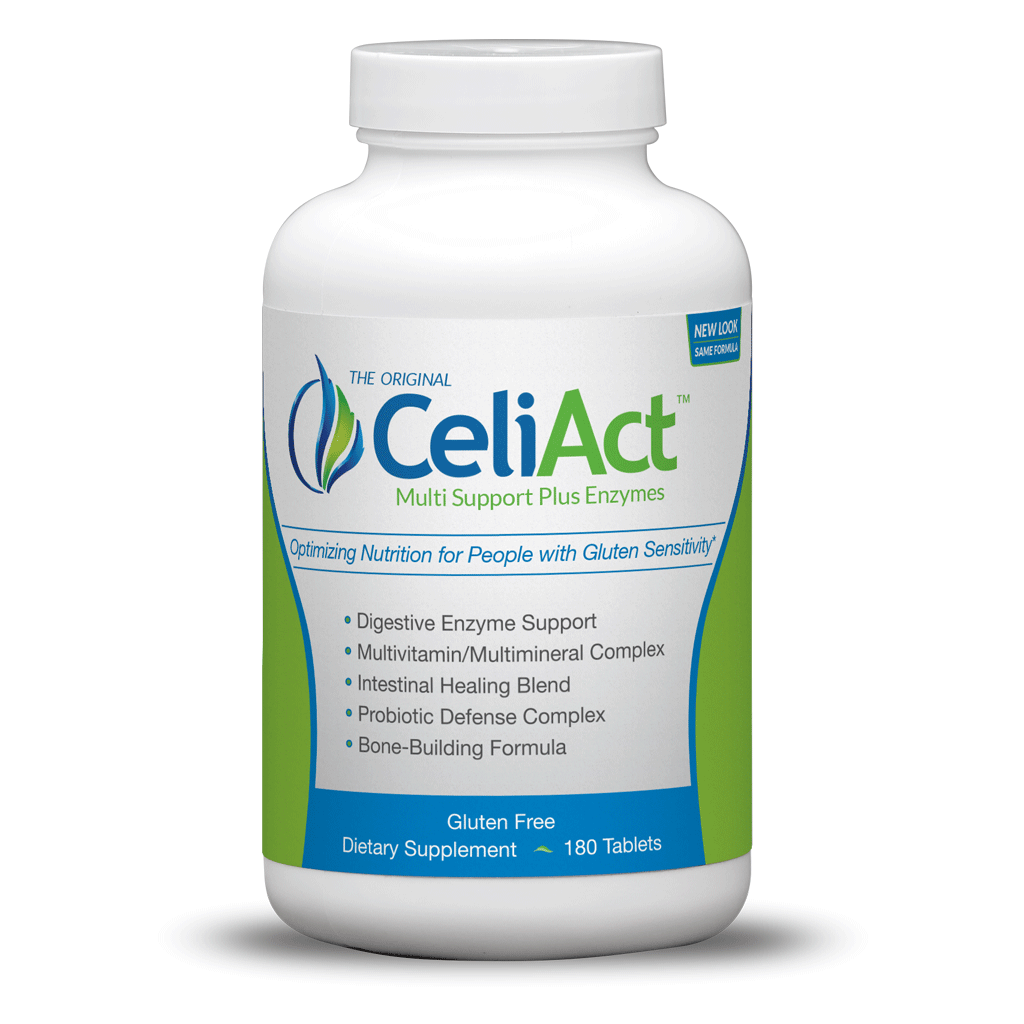
CeliAct complements the gluten free diet to provide a complete nutritional solution for people with celiac disease. CeliAct provides your body with nutrients and compounds to minimize the risk of the complications that people with celiac disease suffer from the most.
|
CeliAct Products

|

An intestine that's been hurt by celiac disease loses its ability to absorb nutrients. Digestive enzymes assist your intestine by breaking down food and releasing more vitamins and minerals to reduce the risk of nutrient deficiencies.
That's why CeliAct contains a potent blend of vegetarian digestive enzymes that help you get the most nutrients out of the food you eat.
Read more about this component
|
 |

The intestine of someone with celiac disease doesn't absorb essential vitamins and minerals as well as it should. That's why CeliAct contains high-potency nutrients that people with celiac disease need the most:
- Vitamin A, E, K: A trio of fat soluble vitamins that are important for immunity, blood clotting, and vision.
- Vitamin C: A powerful antioxidant that protects your cells from damage.
- B-complex Vitamins: Almost every metabolic process in your body relies on B-complex vitamins.
- Anemia-Fighting Nutrients Folic Acid and B12: To reduce the risk of anemia, which nearly 50% of all celiac disease patients struggle with, CeliAct contains folic acid and B12.
Read more about this component
|

|

When it comes to repairing your damaged intestine, you need more than just a gluten free diet. You need to supplement with nutrients that boost and accelerate intestinal healing.
- Zinc: Helps your body to patch up holes and gaps in your intestinal lining.
- Glutamine: Food for your famished intestinal cells that are busy repairing themselves.
- Citrus bioflavonoids: Powerful antioxidants that reduce inflammation in the intestine—giving it the breathing room it needs to heal.
Read more about this component
|

|

Highly regarded celiac disease researcher Dr. Alessio Fasano suggests that probiotics, the friendly bacteria that live in your gut, might someday turn out to be a cure for celiac disease. While this therapy does not yet exist, probiotics still offer many benefits for people with celiac disease. That's why CeliAct contains:
- Lactobacillus Acidophilus, Bifidobacterium Lactis, and Bacillus Coagulans: The super bacteria that put yogurt on the map, probiotics provide a wealth of benefits to people with celiac disease. They help to toss out bad bacteria, assist in digestion, and lend a much-needed hand to your body's intestinal healing cells.
Read more about this component
|

|

One in four people with celiac disease suffer from osteoporosis, a chronic disease that results in weak and brittle bones. CeliAct strengthens bones with:
- Calcium: The "cement" that makes bones strong. People with celiac disease need extra calcium.
- Vitamin D: Proven to make calcium more effective. Many people with celiac disease don't get the vitamin D their body needs from their diet and sunlight alone.
- Magnesium: An essential mineral required for new bone cell formation.
Read more about this component
|

|
|

|